
I wasn’t looking for it. That’s the part nobody believes. I was looking for a stud finder.
My name’s Nathan. I’m 41. I live in a two-story colonial in Naperville, Illinois — one of those Chicago suburbs where the school district is the whole reason people move there and the biggest neighborhood scandal in a decade was somebody putting up a fence six inches over a property line. I’m a mechanical engineer. I design HVAC systems for commercial buildings. I’m the kind of man who owns a labeled toolbox, keeps receipts in a folder, and knows where everything in his house is supposed to be.
Which is exactly why the second phone bothered me the way it did. Because things in my house have places. And a phone taped to the underside of a drawer is not a place.
My wife, Renee, is 39. She’s a dental hygienist. We’ve been married for twelve years. Two kids — Mason, 9, and Ella, 6. From the outside, we were the family in the holiday card. Matching sweaters. A golden retriever named Scout. A minivan with a stick-figure decal on the back window that I always thought was a little much but let Renee have because it made her happy.
Seeing the signs in your own marriage? Take the private 3-minute Red Flag Quiz — no email, no login.
Here’s how it started. It was a Sunday afternoon in October. Renee had asked me — nagged me, lovingly — for weeks to hang a large mirror in our bedroom. I finally ran out of excuses. I needed my stud finder, and I couldn’t find it in the garage, and I had a vague memory of Renee borrowing it months earlier to hang something and shoving it in a drawer somewhere. So I started going through the bedroom drawers.
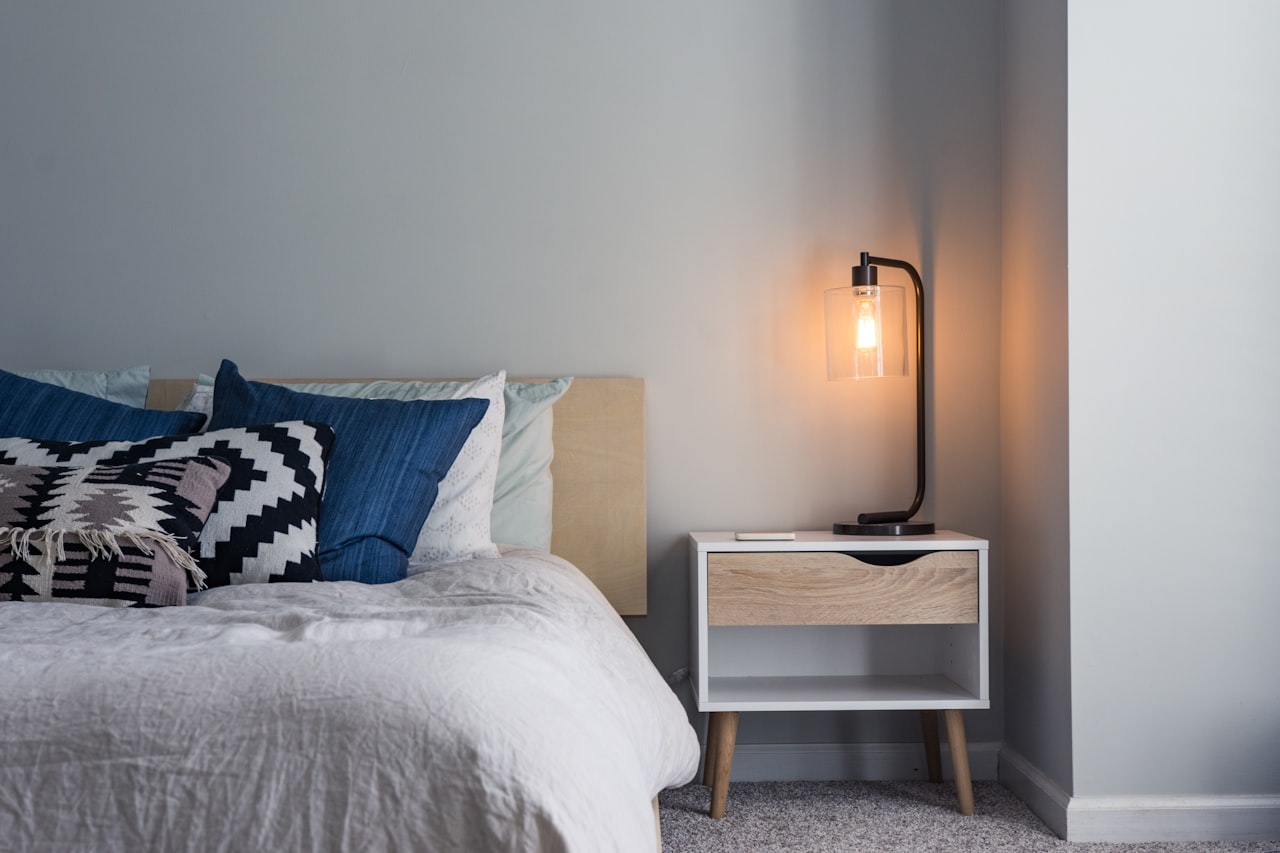
Her nightstand was the last place I looked. I pulled the top drawer all the way out to check behind it — the stud finder’s small, it could’ve slid to the back. And when I flipped the drawer over to look at the back of it, I saw it.
A phone. A cheap black smartphone, not the model she carried, taped to the underside of the drawer with three strips of silver duct tape. My duct tape, I noted, from my labeled toolbox. She’d used my own tape to hide it.
I stood there holding the drawer upside down for what felt like a very long time. An engineer’s brain does a specific thing when it encounters an object that doesn’t fit the system. It doesn’t panic. It tries to find the explanation that preserves the model. Maybe it was an old phone she forgot about. Maybe it was a spare. Maybe there was a reason — a boring, marital, forgettable reason — that my wife had duct-taped a secondary phone to the bottom of a drawer where she thought no one would ever flip it over.
But I’m an engineer. And engineers know that when you have to invent increasingly elaborate explanations to preserve a model, the model is usually wrong.
I peeled the phone off. It was warm. Not hot — warm. Recently used. A phone that had been sitting untouched for months is room temperature. This one had been held, in someone’s hand, within the last hour or two. Renee was downstairs making lunch for the kids. She’d been up here forty minutes earlier, “putting away laundry.”
I pressed the power button. The screen lit up. No passcode — she hadn’t bothered, probably because the phone’s entire security model was its location, not a password. Why lock a phone nobody knows exists?
There was exactly one app on the home screen that mattered. A messaging app. And when I opened it, there was exactly one contact.
One contact. Saved under a single letter: “J.”
I want to describe what it’s like to stand in your own bedroom, holding a secret phone you found taped under your wife’s nightstand, looking at a thread of messages with a single anonymous contact, while your children’s voices float up the stairs asking their mother if they can have juice. It’s not rage. Rage comes later. In that moment it’s more like the floor of your life quietly dropping two inches — everything still standing, but nothing quite level anymore.
I didn’t read all of it standing there. I couldn’t — Renee could come up at any moment, and some instinct I didn’t know I had told me that the worst thing I could do was let her know I’d found it before I understood what I was dealing with. So I did the engineer thing. I documented. I opened the thread, and with my own phone in my other hand, I photographed the screen. Message after message. Scrolling and shooting, scrolling and shooting, my hands steadier than they had any right to be.
Then I taped the phone back exactly where I’d found it — three strips, same positions, the adhesive still holding. I slid the drawer back in. I went downstairs and I told Renee I couldn’t find the stud finder and we’d have to hang the mirror another day. She said, “No worries, babe,” and handed Ella a juice box, and I looked at my wife’s face and understood that I was now the one keeping a secret.
That night, after everyone was asleep, I sat in my car in the garage — the one place in the house I was sure to be alone — and I read the photographs.
“J” was a man. That was clear within a few messages. The thread went back, based on the timestamps I’d captured, at least five months. And it was not an emotional affair. It was not a flirtation that had gotten out of hand. It was a fully operational physical affair, conducted with the logistical precision of two people who had built a system and refined it over months.
They had a schedule. Tuesdays and Thursdays, mostly — the mornings Renee’s hygienist shifts started late. They had locations. A hotel out by the interstate. His place, sometimes, when his roommate was gone. They had protocols. “Text me on this one only.” “Delete after you read.” “If it ever gets found say it’s an old work phone.” They had, God help me, contingency plans for exactly the situation I was now in.
And they had feeling. That was the part that hollowed me out. This wasn’t just sex. There were good-morning messages. There were “I wish it could be like this all the time.” There were, threaded between the logistics, the small intimacies of two people who had fallen into something real — the kind of messages I hadn’t gotten from my wife in years and hadn’t realized I’d stopped getting until I saw her sending them to a man saved under one letter.
I learned who “J” was over the following week, working carefully, the way I’d trace a fault in a building’s ductwork — methodically, following the airflow back to the source. The messages had enough detail. A reference to his job. A mention of a bar he liked. A photo, once, that showed the corner of a work badge. His name was Jared. He was a regional manager for a restaurant group. He was thirty-six. He was, according to the social media I eventually found, engaged — engaged, with a wedding the following summer, to a woman who posted photos of the two of them captioned with hearts.
So there were four people in this. Me. Renee. Jared. And a woman planning a wedding to a man who was spending his Tuesday and Thursday mornings in a hotel by the interstate with my wife.
I spent eleven days building the complete picture before I did anything. Eleven days of eating dinner across from Renee, of watching her put the kids to bed, of lying next to her at night knowing that four feet away, taped under her nightstand drawer, was a phone that had ended my marriage — she just didn’t know it yet. Eleven days of being, for the first time in our marriage, the person who knew more than she did.
I pulled our finances. Nothing obvious — the affair was cash-funded and cheap, motel rooms and nothing traceable, which told me they’d been careful from the start. I checked the second phone twice more when she was out, photographing new messages, confirming the pattern held. I consulted a divorce attorney in DuPage County. Illinois is a no-fault state, which meant the affair itself wouldn’t swing the settlement much — but the attorney told me that documentation like mine was invaluable anyway, for custody discussions and for the simple, brutal clarity of knowing exactly what I was walking into. “Most people come to me with a feeling,” she said. “You’ve come to me with a case file.”
I made one decision during those eleven days that I’ve never regretted. I decided I would tell Jared’s fiancée. Not out of revenge — or not only out of revenge. Because I kept thinking about her posting those hearts, planning a wedding, buying into a future with a man who had a contingency plan for what to say if his affair phone got found. She deserved to know before she married him what I’d had to find out after marrying my way into a family with him. If someone had handed me the truth eleven days earlier — eleven years earlier — I’d have wanted it. So I’d hand it to her.
The confrontation came on a Saturday. I’d arranged for the kids to be at my sister’s for the afternoon. I told Renee we needed to talk. She sat down at the kitchen island with the wary look of a woman who senses weather changing but hasn’t seen the front yet.
I didn’t yell. I didn’t throw the phone on the counter. I did the thing that I think, in the end, unsettled her more than any explosion could have. I laid my own phone on the island, opened to the first photograph, and I slid it across to her.
She looked down. It was a screenshot of her own messages with “J.” I watched her read the top of it. I watched her recognize it. I watched the blood leave her face in real time — that specific grey that comes over a person when the ground they were standing on turns out not to be there.
“Where did you—”
“Under your nightstand drawer. Taped with my duct tape. I was looking for the stud finder.” I let that sit. “You told me to hang the mirror for three weeks. I finally went looking for the tool, and I found your phone instead. So in a way, you’re the reason I found it. You just had to nag me about that mirror one time too many.”
She started to cry. She reached for the phone, my phone, as if she could close the screenshot and close the reality with it. I slid it back toward myself.
“His name is Jared,” I said. “He’s thirty-six. He manages restaurants. He’s engaged — she’s planning the wedding for June. I know about the hotel by the interstate. I know it’s Tuesdays and Thursdays. I know about the good-morning texts. I’ve known for eleven days, Renee. I’ve been sitting across from you at dinner for eleven days knowing all of it.”
The eleven days was the part that broke her. I saw it land. The idea that the man she’d been managing, deceiving, running her careful system around — had been quietly holding the whole truth for a week and a half while she thought she was still safe. Her entire model of the situation collapsed the same way mine had eleven days earlier, standing there holding a drawer upside down.
She did all the things. It didn’t mean anything. It was a mistake. She was going to end it. She loved me. She loved our family. The words came in the order they always come, and I let them, and when she was done I told her the truth: that I’d already seen a lawyer, that I had the entire affair documented across eleven days and five months of messages, and that I was going to tell Jared’s fiancée because she deserved to know what she was marrying.
That last part stopped Renee cold. “You can’t do that,” she said. “You’ll ruin his—” and then she caught herself, but too late, because we’d both heard it. Her instinct, in the wreckage of our marriage, had been to protect him. To protect his engagement. His future. I looked at her and she looked at me and there was nothing left to say about whose side she was on. She’d told me in half a sentence.
I told Jared’s fiancée two days later. I found her through the social media I’d already traced. I sent her a message that was calm and short and included three of the screenshots — enough to be undeniable, not so much as to be cruel. I told her I was sorry to be the one, that I had no interest in anything from her, and that I simply believed she had a right to know before June what I’d learned in October. She never wrote back. But Jared’s engagement photos came down within a week, and the wedding, as far as I can tell, never happened. I didn’t do that to her. Jared did. I just declined to let her walk into it blind.
The divorce is nearly final now. Illinois being no-fault meant it was clean, financially — we split things down the middle, and I have the kids just over half the time. Renee moved to an apartment in Aurora. Jared, I understand, is neither with his fiancée nor with Renee — the relationship that felt like “I wish it could be like this all the time” turned out to want no part of being real once real was the only option left. Affairs are like that. They’re built for the hotel by the interstate. They rarely survive daylight.
The kids are okay, in the way kids are okay when the adults work hard to make sure they are. Mason knows something happened. Ella just knows she has two bedrooms now and Scout goes back and forth with them, which she considers a feature. I answer their questions honestly and at a size they can hold, and I never make their mother a villain in front of them, because she’s their mother and that’s a different relationship than the one she detonated with me.
I hung the mirror eventually. By myself, on a weekend the kids were with Renee, in a bedroom that was now just mine. I found the stud finder, too — it had been in the garage the whole time, in a bin I’d overlooked, exactly where it should have been. It was never in her nightstand. There’d been no reason to open that drawer at all, except that I couldn’t find a tool that wasn’t lost, in a search that led me to the one thing in my house that was never supposed to be found.
Sometimes I think about that. How the phone had a perfect hiding place. Taped where no one flips. Passcode-free because its whole security was secrecy. A contingency plan for every scenario except the dumbest, most domestic one imaginable — a husband who couldn’t find his stud finder and finally went looking for the mirror his wife wouldn’t stop asking him to hang.
She built a system that could survive almost anything. It couldn’t survive a honey-do list.
Check the drawers. Flip them over. The house always tells the truth eventually — you just have to be holding it upside down at the right moment.
If this story hit close to home, you’re not alone. Start here:
- 35 Signs Your Wife Is Cheating — The Complete Guide
- What to Do First When You Find Out Your Wife Is Cheating
- Take the Red Flag Quiz →
Go Deeper
The Red Flag Field Manual
32-page PDF guide: investigation framework, confrontation scripts, legal protection checklist, and the first 48-hour survival plan. Instant download.
Get Instant Access — $19 →🔒 Secure PayPal checkout · Instant download

Vivek is the founder, writer, and editor of Revenge Nation Stories, a men's resource on infidelity and recovery. Not a lawyer or therapist — a researcher and writer committed to giving men clear, honest, practical information when they need it most.
Eyes Open is the 182-page guide for the man who sees the signs — what they mean, what to do next, how to protect yourself, and how to get your life back.
Get Eyes Open →