
The irony of a work-from-home affair is that it’s harder to hide — and yet somehow easier to explain away. You’re in the same building. You see her all day. You eat lunch ten feet from her desk. And you still almost miss it.
Because when both of you are home, the affair doesn’t need suspicious absences. It doesn’t need late nights at the office or unexplained business trips. It just needs a screen, a closed browser tab, and a pair of headphones. The entire relationship — emotional, sexual, logistical — can exist on a laptop that sits on your kitchen table, and you’ll walk past it every day thinking she’s answering emails.
Work-from-home changed everything about how affairs operate. Constant digital contact through Slack, Teams, WhatsApp, and Signal replaced the break room and the parking lot. Camera-off meetings became private conversations. Lunch hours with no witnesses became windows for phone calls you’ll never know about. And the emotional intimacy that builds between two people who share the daily grind of remote work — the frustrations, the inside jokes, the feeling of being the only person who “gets it” — creates the conditions for an affair to develop without anyone ever leaving the house.
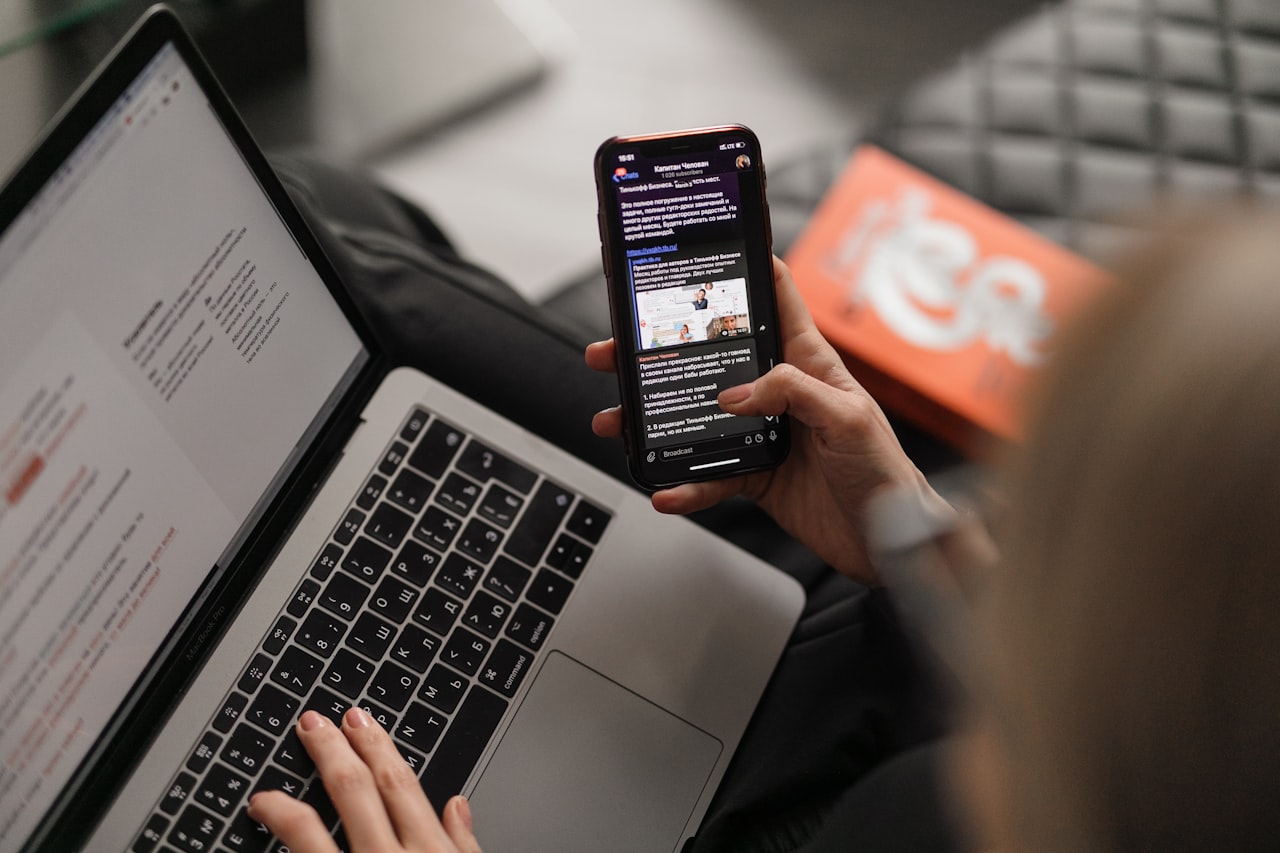
Remote work has changed where affairs begin — shifting them from break rooms and parking lots to private messaging channels.
Seeing the signs in your own marriage? Take the private 3-minute Red Flag Quiz — no email, no login.
Why WFH Affairs Hide Differently
The traditional affair playbook doesn’t work when both spouses are home all day. She can’t say “I’m working late at the office” when the office is the spare bedroom. She can’t claim a business dinner when you can see her calendar. So the cover story changes — and it gets much harder to spot.
The affair goes digital-first. Physical contact becomes less frequent but emotional contact becomes constant. The daily connection — the texting, the voice notes, the “you won’t believe what just happened in our meeting” messages — runs through work tools that look exactly like work. She can be in a full emotional affair from your living room couch and you’ll see nothing but a woman typing on her laptop.
The tools are built for concealment. Slack DMs disappear if the workspace has retention limits. Teams chats can be deleted. WhatsApp and Signal have disappearing messages. These aren’t spy tools — they’re standard workplace apps. But they create private channels that leave no visible trace on the screen by the time you walk by with a cup of coffee.
There’s no suspicious absence to flag. Traditional affair detection relies on gaps — where was she? Why was she late? Who was she with? In a WFH affair, there are no gaps. She’s physically present all day. Her car is in the driveway. She’s “at her desk.” The affair lives inside a screen she controls, and the screen looks exactly the same whether she’s writing a quarterly report or telling another man she can’t stop thinking about him.
That’s what makes this version so dangerous. You can’t catch what you can’t see. And you can’t see what’s hiding behind the same screen she uses for legitimate work eight hours a day.
The 12 Signs
Screen and Device Behavior
These are the signs that live in the six inches between her screen and your line of sight.
Sign 1: The quick minimize
You walk toward her desk. In the half-second before you’re close enough to see, she minimizes a window or switches tabs. It’s fast. Practiced. The screen that greets you when you arrive is her inbox or a spreadsheet — something boring and unquestionable.
Why it matters: Normal work doesn’t require concealment. If she’s reviewing a report or answering a client email, there’s no reason to switch screens when you approach. The quick minimize is a reflex — and reflexes come from repetition. She’s been hiding that screen from you long enough that the motion has become automatic.
What to watch for: Consistency. Does it happen every time, or just occasionally? If it’s every time you walk by — especially at certain hours — she’s protecting a specific conversation, not just avoiding distraction.
Sign 2: Headphones in for “focus” — but she’s not on a call
She puts headphones in and says she needs to focus. Fair enough — remote work requires concentration. But you notice she’s wearing them during times she’s not on any call. No meeting. No music playing. Just headphones in, world out.
Why it matters: Headphones create a privacy barrier without a closed door. They signal “don’t talk to me” without saying it explicitly. And they allow her to listen to voice messages, take whispered calls, or hear notifications from apps she doesn’t want ringing through the room — all while appearing to be in deep work mode.
What else it could mean: Genuine focus strategy. Many remote workers use headphones for concentration. The concern arises when headphones appeared as a new habit and coincided with other behavioral changes on this list.
Sign 3: Multiple browser windows she doesn’t explain
Her laptop has four or five browser windows open. She shows you things from one of them — a work dashboard, a document, an article. The others stay minimized. If you ask casually, she says “just work stuff” without specifics.
Why it matters: Multiple windows are normal for any knowledge worker. What’s abnormal is the selectivity — she shares content from some windows freely and protects others completely. If she’s working on a confidential project, she’d likely say so. Vagueness about what’s on her screen is different from confidentiality about what’s on her screen.
Sign 4: Notifications she dismisses before you can read them
A notification pops up on her phone or laptop. She taps it away instantly — before the preview text has been visible for more than a fraction of a second. Not all notifications. Specific ones. From specific apps.
Why it matters: Speed of dismissal correlates with sensitivity of content. Work notifications from Jira or Google Calendar don’t require split-second clearance. Notifications she doesn’t want you to see do. Pay attention to which apps produce the fast dismissal — if it’s Slack, WhatsApp, or Signal rather than standard work tools, that’s a pattern worth noting.
What to do: Don’t confront on this sign alone. Note the app, the time, and her behavioral state before and after. Over a few weeks, the pattern either confirms or dissolves.
Schedule and Routine Signs
These are the signs embedded in how she structures her day — specifically, the parts of her day she’s structured around something other than work.
Sign 5: “Focus blocks” or “deep work” hours she enforces with unusual strictness
She has a block on her calendar — say, 1 PM to 3 PM — labeled “deep work” or “focus time” or “project block.” During this window, the door is closed. Interruptions are not welcome. You know better than to knock unless the house is on fire.
Why it matters: Protected time blocks are a legitimate productivity tool. But when they’re enforced with unusual rigidity — when the door closes at the same time every day and she’s visibly irritated if you interrupt — they may be serving a purpose beyond productivity. A protected communication window looks exactly like a protected work window from the outside.
What to watch for: Does her mood change before and after the block? Is she more relaxed or happier after these windows? Does the block coincide with specific days that track with another pattern?
Sign 6: Lunch “meetings” that aren’t on her shared calendar
She takes calls during lunch — not unusual. But the calls happen in her car, in the backyard, in the one room where you can’t overhear. And when you check the family-shared calendar, there’s nothing scheduled for that time.
Why it matters: Work calls happen at desks with screens and notes. Calls that require physical distance from your spouse happen in cars and backyards. If she’s regularly taking calls in locations designed for privacy rather than productivity, the calls aren’t about work.
Sign 7: Camera off for all-hands calls but camera on for specific 1:1s
She dials into the team meeting in sweatpants with her camera off. Normal remote behavior. But on certain calls — specific 1:1s — the camera goes on. She fixes her hair. She puts on a top that isn’t what she’s been wearing all morning. She closes the door.
Why it matters: Effort is directional. She’s not getting camera-ready for her entire team. She’s getting camera-ready for a specific person. Note which meetings produce the effort. If it’s the same person consistently — and especially if that person is someone she used to mention frequently and now doesn’t mention at all — the effort tells you who it’s for.
Sign 8: Work schedule extends past her company’s hours on specific days
She works until 7 PM on Tuesdays and Thursdays but logs off at 5 on other days. The extended hours aren’t random — they follow a pattern. And if you check her company’s stated hours or ask a casual question about workload, the extra time doesn’t match what her team is actually doing.
Why it matters: Patterned schedule extensions on specific days suggest scheduled contact with a specific person — not workload-driven overtime. Random late nights happen to everyone. The same late nights on the same days every week is a calendar, not a crunch.
Related: Signs Your Wife Is Cheating With a Coworker — when the WFH signs overlap with coworker-specific red flags.
If you’re seeing multiple signs from this list, the Red Flag Quiz was built for exactly this — 15 questions that tell you whether what you’re observing is a pattern worth acting on.
Behavioral Tells
These are the signs that don’t live in her screen or her schedule — they live in her mood, her language, and her reactions.
Sign 9: Mood changes that track with his availability, not her workload
She’s energized and warm on Monday through Wednesday. Thursday and Friday she’s flat and withdrawn. You assume it’s work fatigue — end of the week. But then you notice that her mood doesn’t correlate with her actual workload. It correlates with something else. Maybe her coworker’s PTO schedule. Maybe the days a specific Slack channel is active. Maybe the days he’s online versus offline.
Why it matters: Mood that tracks with another person’s presence rather than external stressors is one of the most reliable indicators of emotional attachment. If she’s noticeably happier on days that have no objective reason to be better than other days — and if those days align with when a specific person is available — her emotional center has shifted. It’s orbiting someone else.
What to watch for: Does her mood dip when a specific colleague is on vacation? Does she seem unusually irritable during stretches when someone has been “offline” or “traveling”? The correlation tells the story.
Sign 10: New work language, references, or inside jokes
She’s quoting someone you don’t know. She references conversations — “we were joking about that in the meeting” — but the jokes are unusually specific, unusually warm, unusually frequent. She uses phrases or vocabulary that didn’t exist in her lexicon three months ago. She laughs at her phone during work hours and when you ask what’s funny, the explanation is vague.
Why it matters: Shared language is intimacy infrastructure. Inside jokes, borrowed phrases, and referenced conversations are the building blocks of a private world between two people. When your wife’s language starts reflecting someone else’s influence more than yours — she’s spending her creative, playful, connective energy on someone else.
Sign 11: She’s “at her desk” but not productive
She claims to be swamped. She’s at her laptop all day. But her actual work output hasn’t increased — and may have decreased. Projects are late. She’s distracted in meetings her team complains about. She’s busy, but the busyness isn’t producing results.
Why it matters: Screen time without proportional output means the screen time is going somewhere other than work. If she’s spending hours at her desk but her performance is slipping, the hours are being absorbed by something that isn’t in her job description.
What else it could mean: Burnout. Depression. Genuine work struggles. The concern escalates when decreased productivity coincides with increased screen protectiveness, mood tracking with a specific person’s availability, and other signs on this list.
Sign 12: She reacts defensively when you casually mention joining her on a video call
You say it as a joke, or half-seriously, or out of genuine curiosity: “Hey, I’ll jump on your next team call — I want to see who you work with.” A normal response to this is “sure” or “it’ll be boring but okay.” What you get instead is pushback. “That would be weird.” “My team doesn’t do that.” “Why would you want to do that?”
Why it matters: Defensiveness about you entering her work world — even casually, even as a joke — signals that her work world contains something she doesn’t want you to see. Or someone she doesn’t want you to meet. A wife with nothing to hide says “sure, but you’ll be bored.” A wife with something to hide says “why would you want to do that?” — and the question isn’t really a question. It’s a boundary.
Related: Is My Wife Cheating? — the full behavioral checklist beyond WFH-specific signs.
The WFH Affair Escalation Pattern
These affairs follow a remarkably consistent trajectory. Understanding where your wife might be on this path helps you assess urgency.
Stage 1: Work tools. It starts in Slack DMs, Teams chat, or work email. The conversation is professional with personal edges — sharing frustrations, making jokes, being the person who “gets it.” This stage is invisible to you because it looks exactly like work.
Stage 2: Personal messaging. The conversation migrates to WhatsApp, Signal, iMessage, or Instagram DMs. This is the critical boundary — they’ve moved the relationship off company infrastructure and onto personal channels. It’s a deliberate choice that says: this conversation is ours, not work’s.
Stage 3: Phone calls. Texting becomes calling. Calls happen during lunch, during “focus blocks,” during evening “work sessions.” The calls are longer and more frequent than any work relationship would require. This is where emotional affairs solidify.
Stage 4: Physical meeting. The first in-person contact outside of mandatory work events. A “coworking” coffee. A “work lunch” that isn’t on any calendar. A conference where they happen to both attend. This is the bridge from digital to physical — and once it’s crossed, the affair almost always escalates.
31% of all affairs involve a coworker (PR Newswire / HighSpeedInternet.com, 2024). Remote work hasn’t reduced this percentage — it’s changed the channel. The affairs that used to start in break rooms and parking lots now start in Slack channels and Zoom DMs. The destination is the same. Only the on-ramp has changed.
Signs the affair has gone physical: car mileage that doesn’t match her stated location on days she claimed to be home. Unexplained gaps when she “stepped out for fresh air” or “ran a quick errand” that took ninety minutes. A shower in the middle of the workday for no apparent reason. Perfume at 2 PM on a Tuesday when she’s supposedly been at her desk all day.
How to Verify Without Tipping Her Off
Work in the same room occasionally. Not every day — that’ll trigger suspicion. But once or twice a week, casually set up your laptop at the same table. “The desk upstairs is killing my back.” Watch the behavioral change. Does she migrate to another room? Does the headphone usage spike? Does her phone go face-down?
Keep a private log. Note specific call times — date, time, duration, her mood before and after. Over two to three weeks, patterns emerge that are impossible to dismiss as coincidence.
Check car mileage on days she claims to have been home all day. If the odometer shows 30 extra miles on a Tuesday when she said she never left, something drove those miles. Something she didn’t tell you about.
Review carrier call logs. If she’s on your wireless plan, you can request call records from your carrier — completely legal. Look for repeated calls to unfamiliar numbers, especially during her “focus blocks” or lunch breaks. Duration patterns matter more than frequency: forty-five-minute calls to the same number at the same time every week is a relationship, not a work call.
Do NOT access her work apps or devices. This is critical. Her work laptop, her company Slack, her corporate email — these are her employer’s property, and unauthorized access may violate both company policy and federal computer fraud statutes. Stick to information you can access legally: carrier records, joint financial accounts, vehicle mileage, and your own observations.
Related: Wife Phone Behaviors — Red Flags — the device-specific patterns that apply across WFH and in-office settings.
Frequently Asked Questions
She works for herself or freelances — does this still apply?
Yes — and in some ways, it applies more. Self-employed and freelance workers have even less external structure and oversight. There’s no HR, no team calendar, no shared workspace that creates accountability. Her schedule is entirely self-managed, which means protected time blocks, unexplained calls, and inconsistent productivity are even easier to maintain without scrutiny.
We work in different rooms. Am I overreacting to not seeing her screen?
Separate workspaces are normal and healthy for remote work. The concern isn’t that you can’t see her screen — it’s the combination of factors. If separate rooms coincided with the other signs on this list (mood tracking, defensive reactions, schedule anomalies, increased phone privacy), the physical separation is relevant context. If nothing else has changed, separate rooms are just separate rooms.
She gets defensive when I walk by her desk. Is that about the affair or just work privacy?
It depends on what else is happening. Some people genuinely dislike having someone look over their shoulder while they work — that’s a personality trait, not a red flag. The distinction is whether the defensiveness is new, whether it’s disproportionate, and whether it’s accompanied by other signs from this list. “Hey, I’m in the middle of something” is normal. Slamming a laptop shut when you enter the room is not.
You See Her All Day. That Doesn’t Mean You See Everything.
The most painful thing about a WFH affair isn’t the betrayal itself — it’s the proximity. She was right there. In the next room. At the same table. You could hear her typing. You could hear her laughing on calls. You made her coffee at 2 PM and brought it to her desk and she smiled and said thank you and went back to a conversation you couldn’t see with a person you didn’t know existed.
That closeness makes it feel like it should have been impossible to miss. But WFH affairs aren’t designed to be caught by proximity. They’re designed to be hidden by it. The screen is the wall. The headphones are the closed door. And the cover story writes itself every day: she’s working.
If you’re seeing the signs on this list — multiple signs, consistently, over weeks — trust what you’re observing. Document it. Review the carrier records. Check the mileage. And when you’re ready, read the guides on this site that walk you through what comes next.
You’re not paranoid. You’re paying attention. And the fact that she’s ten feet away doesn’t mean she isn’t already gone.
Take the Red Flag Quiz → — 15 questions that tell you whether the pattern is real.
Read Next:
Go Deeper
The Red Flag Field Manual
32-page PDF guide: investigation framework, confrontation scripts, legal protection checklist, and the first 48-hour survival plan. Instant download.
Get Instant Access — $19 →🔒 Secure PayPal checkout · Instant download

Vivek is the founder, writer, and editor of Revenge Nation Stories, a men's resource on infidelity and recovery. Not a lawyer or therapist — a researcher and writer committed to giving men clear, honest, practical information when they need it most.
Eyes Open is the 182-page guide for the man who sees the signs — what they mean, what to do next, how to protect yourself, and how to get your life back.
Get Eyes Open →