
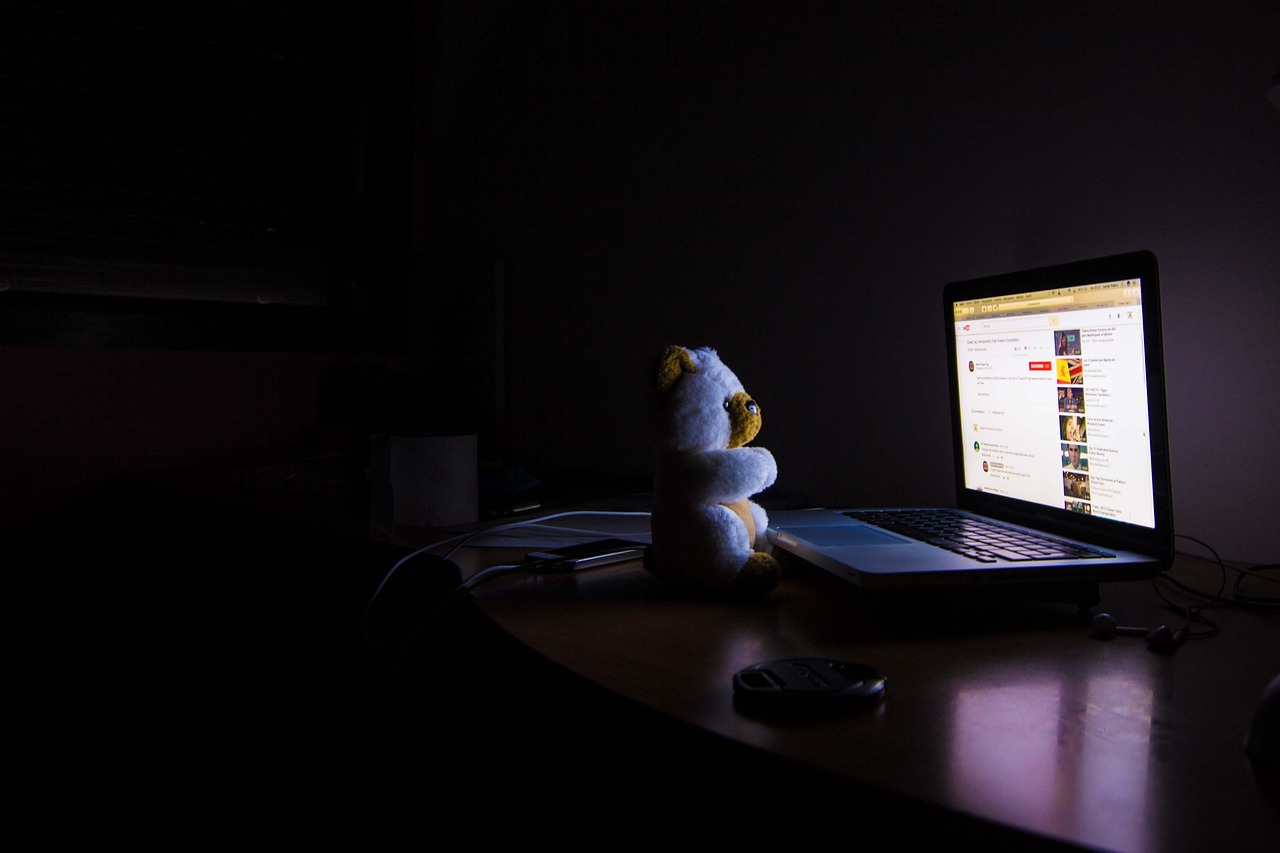
We bought the baby monitor for our daughter. That’s the whole reason it existed — a little camera on a shelf in the nursery so we could watch Emma sleep from our phones, check on her during naps, hear her when she woke up. A three-hundred-dollar peace-of-mind device that every parent of a newborn buys and then can’t imagine living without.
I never once thought of it as a security camera. It was a baby monitor. It pointed at a crib. It was the most innocent object in our house.
Until the afternoon it recorded something that had nothing to do with our daughter.
My name’s Aaron. I’m 35. I live in a townhouse in Cary, North Carolina — one of those planned communities in the Research Triangle where every third person works in tech or pharma and the sidewalks are so clean they look fake. I’m a software developer at a health-tech company. My wife, Kayla, is 33. She’s a labor and delivery nurse, though she’d been off on maternity leave and then extended leave for the past several months after we had Emma, who’s now eight months old.
Seeing the signs in your own marriage? Take the private 3-minute Red Flag Quiz — no email, no login.
That detail matters: Kayla was home. All day, most days. Home with Emma while I went into the office. A new mother on leave, in a townhouse, with a baby and a baby monitor and long empty afternoons.
We’d been married three years. Emma was our first, very much wanted, the product of two years of trying. When she finally arrived, I thought we’d never been closer. New parents, exhausted and delirious and united in this enormous shared project of keeping a tiny human alive. I was so deep in the fog of new fatherhood — the sleep deprivation, the bottles, the wonder of it — that I didn’t notice the other fog that had rolled into my marriage.
The monitor was a Nanit — one of the nice ones, the kind that mounts over the crib and streams to your phone and stores clips in the cloud. It had a feature I’d set up and mostly forgotten about: it recorded short clips when it detected sound or motion in the room, and saved them to the app so you could review the night, see how many times the baby stirred, that kind of thing. Useful data for anxious first-time parents. I’d geeked out on it early — I’m a developer, I love a good data feature — and then, like most such features, it faded into the background of my attention.
Here’s how I found out.
It was a Thursday. Emma had been fighting a low fever the night before, and around 2 PM at my desk I got a pang of new-dad anxiety and decided to check the monitor to see if she was napping okay. I opened the Nanit app. The live view showed the nursery — crib, mobile, the little sound machine, everything normal. Emma wasn’t in the crib, which wasn’t alarming; Kayla often held her for naps when she was sick.
But out of habit, I scrolled down to the recorded clips from that day, just to see how her morning nap had gone. There were the usual clips — Emma stirring at 9, Emma down at 10, Kayla coming in to check her at 10:40. And then there was a clip from 1:15 PM that the motion sensor had captured.
The clip wasn’t of Emma. Emma wasn’t in the room. The motion that triggered it was in the doorway of the nursery, at the edge of the frame. It was Kayla. And a man.
They were in the hallway just outside the nursery door, visible in the corner of the wide-angle lens. Only for a few seconds, before they moved out of frame. But it was enough. It was more than enough. My wife and a man I didn’t recognize, and the way they were standing, the way he had his hand on her — this was not a plumber. This was not a neighbor returning a package. I have watched those four seconds more times than I want to admit, and there is no innocent version of them. None.
I sat at my desk in an open-plan office with thirty coworkers around me and I felt the floor of my life give way in total silence. I couldn’t react. I couldn’t make a sound. I just stared at four seconds of footage from a baby monitor, replaying, while a standup meeting happened eight feet away and someone asked if I was joining.
I said I wasn’t feeling well. I went home early. Not to confront her — I wasn’t ready, I didn’t have a plan, and some deep instinct told me not to detonate this while I was shaking. By the time I got home the man was gone, of course. Kayla was on the couch with Emma, who was feeling better, and she smiled at me and said, “You’re home early! Everything okay?” and I said I had a headache, and I held my daughter, and I looked at my wife over the top of our baby’s head and I understood that I was now living in a different marriage than the one I’d woken up in.
That night, after Kayla and Emma were both asleep, I did what I do. I’m a developer. Data is my native language. I sat at my laptop and I went through the Nanit app’s entire clip history — weeks of it, going back as far as the cloud storage held.
The 1:15 PM clip from that Thursday was not the only one.
Once I knew what to look for — motion in the doorway, the hallway, the edges of the frame, during the early afternoon hours when Emma was napping and I was at work — I found a pattern. Not every day. But often. Tuesdays and Thursdays, mostly, and the occasional Monday. A figure at the edge of the frame. Sometimes just Kayla passing through. Sometimes Kayla and the man. The monitor, pointed faithfully at our daughter’s crib, had been capturing the edges of my wife’s affair for weeks, in the negative space around the baby it was meant to watch.
The cruelty of the geometry got to me. The camera was there for Emma. It ran because of Emma. It recorded because our daughter might stir and need us. And in the margins of all that devotion, it had documented her mother bringing a man into our home during nap time — conducting an affair in the same house, down the same hall, while our baby slept in the room the camera was protecting.
I didn’t recognize the man from four seconds of hallway footage. But I’m patient, and I’m thorough, and I had more clips. In one, from a Monday two weeks earlier, he passed closer to the doorway and the camera caught his face for most of a second. I froze it. I didn’t run it through anything invasive — I just looked at it, and then I looked at Kayla’s world, and I found him faster than I expected. He was in a few of her tagged photos from her hospital, from before her leave. A respiratory therapist she’d worked with. I’ll call him what the clips made him: the man in my hallway.
His name I learned from those same hospital connections — a coworker from Kayla’s floor, someone she’d worked alongside for years before Emma, someone whose name had never once come up at our dinner table, which I’ve learned is itself the tell. The people who matter most in an affair are the people who never get mentioned at home.
I spent a week building the complete picture before I said a word. I backed up every relevant clip out of the Nanit cloud onto a drive Kayla couldn’t touch — because cloud clips can be deleted, and I wasn’t going to let this evidence live somewhere she controlled. I pulled our phone records and found his number, heavy contact during my work hours going back to around the time her extended leave began. I checked nothing financial worth mentioning — this affair was happening in my own house, for free, which somehow made it worse. It didn’t cost her a hotel. It cost her nothing but the nap window.
I talked to a family law attorney in Wake County. North Carolina is one of the few states that still allows an “alienation of affection” claim — a civil suit against the affair partner — and my attorney flagged it as a real option given the documentation. More immediately, North Carolina requires a year of separation before divorce, and adultery can affect alimony and, in some cases, the tenor of custody discussions. My attorney watched four seconds of a baby monitor clip and said, “In twenty years I’ve had clients bring me a lot of things. I’ve never had a baby monitor catch it. This is unambiguous.”
The confrontation was on a Saturday. Emma was at my mother’s for the afternoon — I’d arranged it, told Kayla I wanted us to have a real conversation about “how we were doing,” which was true, in a sense.
I didn’t yell. I had Emma’s monitor clips, but I didn’t want to weaponize our daughter’s camera in a screaming match. I wanted it clean. I set my laptop on the coffee table, open to a single frozen frame — the man’s face, caught in the nursery doorway, timestamped.
“Do you know who this is?” I asked.
She looked. And I watched her face fall through the floor. She knew exactly who it was. She knew exactly where the image came from, too — I saw her eyes flick toward the hallway, toward the nursery, toward the little camera over the crib, as the understanding arrived that the device she’d never thought about had been watching the whole time.
“Aaron—”
“The baby monitor, Kayla. The Nanit. It records motion clips. It’s been recording them for months. Every time he came here on a Tuesday or a Thursday while Emma napped, it caught the two of you in the hallway. I have weeks of it. I know who he is. I know it started around when your leave began. I’ve backed all of it up. So please don’t tell me it was one time or a mistake or something I misunderstood, because I’ve watched the footage, and there’s nothing to misunderstand.”
She started to cry. She reached for the laptop — the reflex, always the reflex, the grab for the evidence. I closed it and moved it out of reach.
“He was in our home,” I said, and this was the part my voice finally cracked on, the only time it did. “With Emma down the hall. In the room right next to the one with her crib. You brought him into the house where our daughter sleeps, during her naps, with her monitor running. That’s the part I will never understand as long as I live. Not the affair. The where. The when. Our daughter was thirty feet away.”
She didn’t have an answer for that. There isn’t one. She said all the other things — it was a mistake, she was lonely on leave, she felt like she’d disappeared into motherhood, she was going to end it, she loved me, she loved Emma. Some of it may even have been true. Loneliness on leave is real. The disappearing is real. But none of it touches the fact that she chose to answer that loneliness by bringing a man into our child’s home, past our child’s door, in our child’s nap window, week after week.
I told her I was filing. I told her I had the documentation and that it was secured somewhere she couldn’t reach. I told her that I would always co-parent Emma with her fairly and without poison, because Emma deserves two parents who don’t make her a battlefield — but that our marriage was over, and no amount of crying on our couch was going to reopen it.
The separation started that week. The divorce will finalize after North Carolina’s mandatory year. I have Emma close to half the time now, and I’m fighting — respectfully, thoroughly, with a good attorney — for that to hold as she grows. The affair partner stopped appearing the moment consequences did; the alienation-of-affection option remains on the table, and he knows it, and it has made him very interested in never being near my family again. Kayla moved to an apartment nearby, close enough for easy custody exchanges, which I insisted on for Emma’s sake even though every exchange costs me something.
Emma won’t remember any of this. That’s the one mercy. She was eight months old. She’ll grow up with two homes and two parents who show up for her, and if I do my job right she’ll never know that the camera that watched over her crib is also the reason her parents live apart. That’s a secret I’ll keep for her, gladly, forever.
The Nanit is still over her crib. I kept it. People find that strange — why keep the thing that showed you the worst day of your life? But it never stopped being what it was built to be. It watches my daughter sleep. It tells me she’s safe. On the nights Emma’s with me, I still pull it up on my phone from the next room and watch her breathe, the way I did before I knew anything, the way every parent does.
It did its job the whole time. It watched over my daughter. It’s not the camera’s fault that, in doing so, it also happened to watch over the truth.
I pointed a camera at my child to keep her safe.
I didn’t know it would end up keeping me safe too — from a life built on a lie I’d never have seen coming, in the margins of the one thing in that house I was watching most closely.
Check the monitors. Even the ones pointed at cribs. The house records everything — even the parts you’d give anything not to see.
If this story hit close to home, you’re not alone. Start here:
- 35 Signs Your Wife Is Cheating — The Complete Guide
- What to Do First When You Find Out Your Wife Is Cheating
- Take the Red Flag Quiz →
Go Deeper
The Red Flag Field Manual
32-page PDF guide: investigation framework, confrontation scripts, legal protection checklist, and the first 48-hour survival plan. Instant download.
Get Instant Access — $19 →🔒 Secure PayPal checkout · Instant download

Vivek is the founder, writer, and editor of Revenge Nation Stories, a men's resource on infidelity and recovery. Not a lawyer or therapist — a researcher and writer committed to giving men clear, honest, practical information when they need it most.
Eyes Open is the 182-page guide for the man who sees the signs — what they mean, what to do next, how to protect yourself, and how to get your life back.
Get Eyes Open →