
A note on this story: The account below was submitted to Revenge Nation by a reader. Names and identifying details have been changed. These stories are shared for perspective, community, and reflection — not as verified journalism.
I wasn’t snooping. I want to say that up front, because it matters to me that people believe it. I was looking for a stick of gum.
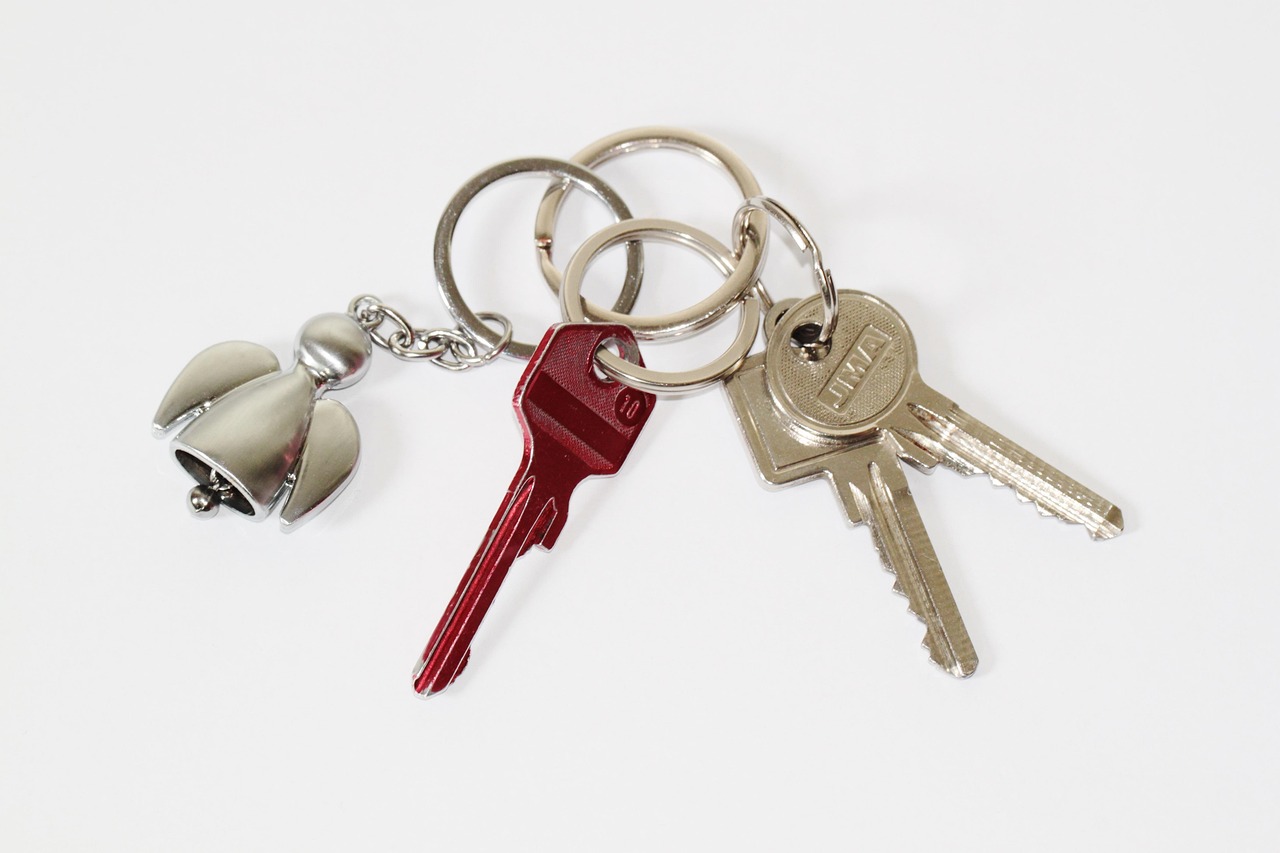
Melissa’s purse lives on the hook by our back door, the same spot it’s lived for six years, and I go into it more often than either of us probably realizes — for gum, for a pen, for the emergency Advil she always has and I never remember to buy. That Tuesday I was just looking for gum before a meeting. What I found instead was a small zippered pouch I didn’t recognize, tucked behind her wallet, and inside it, a single key on a plain silver ring. No fob. No tag. No little rubber cover like the one on our house key so we can tell it apart from the car key at a glance. Just a bare key, the kind you’d get cut at a hardware store counter without saying much to the guy behind it.
I want to tell you I felt something dramatic in that moment. I didn’t. I felt almost nothing, which in hindsight was its own kind of warning sign, because a normal brain finds a mystery key and thinks storage unit, or her mom’s place, or that gym locker she used for a month two summers ago and then quit going to. My brain barely reacted at all. I put it back exactly where I found it, took my gum, and went to my meeting.
It sat with me all day anyway. Not loudly. More like a low hum under everything else, the kind of thing you notice is there without deciding to think about it. That night I asked her, as casually as I could manage, if she’d gotten a new storage unit or something, because I’d seen a key in her purse. I watched her face for half a second before she answered, and it did something I’d never seen it do before — not exactly guilty, more like recalculating, like a computer that’s been asked a question it didn’t expect and needs a beat to generate the response.
“Oh, that’s Danielle’s spare,” she said. “I’m holding it for her while her building does the elevator repair, in case she gets locked out and needs someone to grab something for her.”
It was a good answer. Specific, plausible, slightly boring in exactly the way true things usually are. Danielle was her closest friend from work, a name I’d heard for years, someone I’d met at two or three parties and always found perfectly nice and perfectly forgettable. I said okay, and I meant it, and for about three weeks I didn’t think about the key again.
Here’s the thing about a small, boring lie, though. It doesn’t stay contained. It leaks.
The leak, for me, was a receipt. I do our finances, which I mention only because it’s the reason I was the one who noticed a charge from a hardware store I didn’t recognize, on a Saturday I remembered specifically because Melissa had told me she was getting her hair done and then meeting Danielle for lunch. The charge was for four dollars and change. Key cutting, the description said, when I looked closer at the online statement. Four dollars is nothing. Four dollars is also, apparently, the price of a second copy of a key someone already claimed was a spare she was just “holding.”
You don’t need a spare of a spare. Nobody duplicates a key they’re temporarily babysitting for a friend with a broken elevator. You duplicate a key you intend to keep.
I didn’t say anything that night either. I want to be honest about why: I was scared. Not of her, exactly — scared of what asking the next question would cost me if the answer was what some small, cold part of me already suspected. It’s a strange kind of cowardice, choosing not to ask a question because you’re afraid the true answer will end something you’re not ready to end. I lived in that particular cowardice for about ten more days, watching her more carefully than I’d ever watched anyone, cataloguing things I’d never have noticed before — how her phone came into the bathroom with her now, how “girls’ night with Danielle” had become a nearly weekly fixture when it used to be maybe once a month, how she’d started saying she was tired in a specific new way that had nothing to do with being tired and everything to do with not wanting to be looked at too closely.
The morning it finally broke open wasn’t dramatic either, which I think surprises people. There was no confrontation scene, no dropped phone, no slammed door. Danielle called our house line — an old habit of hers, calling the landline instead of a cell, one of those small generational things — looking for Melissa, who wasn’t home yet from wherever she was. I answered. We made small talk for a minute, the easy kind you make with someone you’ve known peripherally for years. And then, only because I was looking for an opening, I mentioned the elevator.
“The elevator repair,” I said. “Hope that finally got sorted out. Melissa said it’s been a whole thing.”
There was a pause on the line. Not a long one. Just long enough.
“What elevator repair?” Danielle said.
I didn’t say anything else about it. I told her Melissa would call her back, and I hung up, and I sat down at our kitchen table, and I understood, with a clarity that felt almost peaceful after weeks of low-grade dread, that the story had never been true. There was no elevator. There was no spare key being held for a friend with a broken building. There was a key that had been cut once, and then cut again, for a place I had never seen and a reason I now had to find the courage to hear out loud.
When Melissa got home that evening, I didn’t ambush her. I’d had all afternoon to decide how I wanted to do this, and I decided I wanted to do it like a man who already knew the answer and was simply giving her the chance to be honest before I said so myself.
“I talked to Danielle today,” I said. “She doesn’t know anything about an elevator.”
I watched ten years of a very good story collapse in real time. She didn’t yell. She didn’t deny it for long — maybe fifteen seconds of reflexive scrambling, the kind of thing people do out of instinct more than actual hope it’ll work, and then she just stopped, and sat down across from me, and started to cry in the specific way people cry when they’re relieved a secret is finally over even though they’re the one who’s about to lose something because of it.
The key was to an apartment nine minutes from our house. A coworker, not Danielle, not anyone I’d ever heard of — a name that meant absolutely nothing to me and somehow that made it worse, that the person who’d been living in the space my marriage should have occupied was a total stranger I’d never once had cause to think about. It had been going on, in her words, “not that long,” which I’ve since learned is one of those phrases that means whatever the person needs it to mean in the moment they say it, and which turned out, over the following weeks, to have meant considerably longer than that.
I’m not going to pretend the rest of that year was easy, because it wasn’t, and I’m not going to tell you exactly how it ended, because that’s not really the point of writing this. The point is the key.
I keep coming back to how small it was. A blank piece of metal, no fob, no tag, sitting in a zippered pouch behind a wallet in a purse that had hung on the same hook for years. If I hadn’t wanted gum that Tuesday, I don’t know how much longer it would have taken me to find it, or whether I’d have found it at all, or whether I’d still be the guy asking my wife how her lunch with Danielle was, believing every word, mistaking an elevator repair for the truth because it was specific enough and boring enough to sound exactly like one.
That’s the thing I’d want another man to take from this, if he’s sitting with some version of his own blank key right now — some detail that’s small enough to explain away and just strange enough that it won’t quite leave you alone. You don’t need a dramatic discovery. You don’t need a smoking gun. Sometimes it’s four dollars on a hardware store receipt, sitting quietly in a statement you almost didn’t read closely enough to notice. The lie doesn’t have to be big to be real. It just has to be a story with one detail too many, told by someone who’s forgotten you’re the kind of person who checks.
I don’t feel triumphant writing this. I feel like a man who found something he wishes he hadn’t had to find, and who’s slowly learning to trust his own eyes again instead of whatever story is handed to him. That part’s been the hardest — not the finding out, but learning, afterward, that it’s okay to ask the second question instead of accepting the first good answer. I’m getting there. Some days better than others.
If a piece of this sounds like your own life right now — a detail too specific to be nothing, a story too smooth to fully sit right — you’re not being paranoid for noticing. You’re paying attention. That’s not the same thing, no matter what anyone tells you.
If something in this story hit close to home, you don’t have to sit with it alone:
- The Signs Your Wife Is Cheating — The Complete Checklist
- What to Do When You Find Out Your Wife Is Cheating
- Take the Quiz: Is Your Gut Trying to Tell You Something?
Go Deeper
The Red Flag Field Manual
32-page PDF guide: investigation framework, confrontation scripts, legal protection checklist, and the first 48-hour survival plan. Instant download.
Get Instant Access — $19 →🔒 Secure PayPal checkout · Instant download

Vivek is the founder, writer, and editor of Revenge Nation Stories, a men's resource on infidelity and recovery. Not a lawyer or therapist — a researcher and writer committed to giving men clear, honest, practical information when they need it most.